


Peptides for Inflammation Research: Four Mechanisms, and Why the Best-Evidenced One Gets the Least Attention
Search for anti-inflammatory peptides used in peptide therapy and you will get BPC-157, over and over. It has a large rodent literature and no completed controlled human trial. Meanwhile a compound almost nobody in this space discusses ran a randomised, double-blind, placebo-controlled Phase 2 in 64 patients and met its primary endpoint. This reference covers four mechanisms of therapeutic peptides, ranked by what has actually been demonstrated rather than by how often the name appears.
Research-use-only disclaimer: Compounds discussed are supplied for in-vitro and laboratory research use only as research chemicals, not as dietary supplements, and are not intended for human or veterinary use in that context. Clinical trial results are described because they exist for one compound and they concern separate investigational drug products. No dosing or administration guidance appears in this article, and nothing here is medical advice or a treatment claim for any inflammatory or autoimmune conditions, such as rheumatoid arthritis.

TL;DR
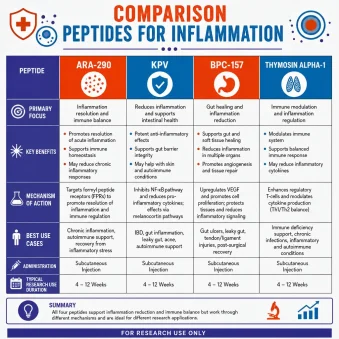
Four compounds, four different points of intervention. ARA-290 (cibinetide) binds the innate repair receptor, an EPO receptor and CD131 heterocomplex separate from the one that makes red cells, and it has a positive randomised placebo-controlled Phase 2 in 64 sarcoidosis patients with a met primary endpoint. KPV enters cells via the PepT1 transporter and inhibits NF-kB, confirmed by a knockout that abolishes the effect. BPC-157 has extensive rodent data and no completed human trial. Thymosin alpha-1 modulates immune cell populations rather than blocking a pathway. Evidence quality and search volume run in almost exactly opposite directions here. Research use only.
ARA-290: innate repair receptor agonist. Phase 2 met its primary endpoint in 64 patients.
KPV: PepT1 uptake then NF-kB inhibition. Knockout control confirms the route.
BPC-157: broad rodent literature, no completed controlled human efficacy trial.
Thymosin alpha-1: immune modulation rather than pathway suppression.
The pattern: attention and evidence run in opposite directions across these four.
Status: research use only.
Four Different Points of Intervention
Chronic inflammation is not one process, often linked to systemic inflammation and chronic pain, and compounds described as anti-inflammatory intervene at different places. Grouping them under one heading obscures the thing that matters most when choosing between them.
Working outward from the cell:
- Intracellular signalling. KPV gets inside the cell first and then inhibits NF-kB, the transcription factor most inflammatory programmes route through.
- Cell-surface receptor. ARA-290 binds a receptor complex on the outside of the cell and triggers a protective programme from there.
- Immune cell populations. Thymosin alpha-1 acts on immune function by modulating which cells are present and what state they are in, rather than on a pathway inside a given cell.
- Tissue-level repair. BPC-157's reported effects on tissue repair sit mostly at the level of tissue repair and tissue healing in injury models, with the upstream mechanism less clearly pinned down.
Those are not four strengths of the same intervention. A compound that blocks NF-kB inside epithelial cells and a compound that changes T cell populations are doing unrelated things, and a study designed around one would not detect the other.
ARA-290, and the Receptor EPO Has That Nobody Uses
This is the compound I think is most underrated in our entire catalogue, and the mechanism is the most elegant piece of drug design in this article.
Erythropoietin is known for making red blood cells. It also has tissue-protective and anti-inflammatory effects that were noticed decades ago and were awkward, because you cannot give someone enough EPO to get the tissue protection without also raising their haematocrit, and raising haematocrit has its own problems.
The resolution came from working out that those two effects run through two different receptors.
The classical EPO receptor homodimer handles erythropoiesis. A separate complex, the innate repair receptor, is a heterocomplex of the EPO receptor with CD131, the common beta subunit, and that one handles the cytoprotective and anti-inflammatory signalling.[1]
ARA-290, also called cibinetide, is an 11-residue peptide derived from helix B of EPO, designed with high affinity and selectivity for the innate repair receptor.[1] It hits the repair receptor and leaves the haematopoietic one alone.
Where the Second Receptor Borrowed Its Other Half
The CD131 half of the innate repair receptor is the detail that makes the rest of this compound's behaviour predictable, and it almost never gets mentioned.
CD131 is the common beta chain. It is not an EPO component at all. It is the shared signalling subunit of the receptors for interleukin-3, interleukin-5 and GM-CSF, three cytokines whose business is myeloid and eosinophil biology.[1]
So the innate repair receptor is a hybrid: one subunit from the erythropoietin system, one borrowed from the inflammatory cytokine receptor family. An EPO derivative with immune-adjacent effects stops being surprising once you know which protein it is signalling through.
Two consequences follow, and the second is the one I find most interesting about this whole compound.
EPO binds the innate repair receptor far more weakly than it binds its own homodimer.[1] That is the entire reason the tissue-protective effects of EPO were an awkward finding for so long. Reaching the repair receptor with native EPO requires concentrations well above what raises haematocrit, so you cannot separate the two effects by dosing. You have to separate them by designing a different molecule, which is what ARA-290 is.
The receptor is not sitting there all the time. Expression of the innate repair receptor is described as induced by tissue injury and metabolic stress (such as in obesity, type 2 diabetes, or hormone imbalance) rather than constitutive.[1] An agonist for a receptor that appears mainly on damaged tissue, such as in cardiovascular disease, has a targeting property built into the biology rather than into the molecule, which is unusual and which is worth more than most formulation tricks.
The Trial That Actually Finished
Almost nothing in this category has been through a controlled human trial. ARA-290 has.
The study was a randomised, double-blind, placebo-controlled, two-centre trial in 64 patients with painful sarcoidosis-associated small fibre neuropathy. Patients received daily subcutaneous cibinetide at 1mg, 4mg or 8mg, or placebo, for 28 days.[2]
It met its primary endpoint. The 4mg dose produced a significant increase in corneal nerve fibre area against placebo, corresponding to roughly a 23 percent increase from baseline.[2]
Secondary results included a significant increase in skin intraepidermal growth-associated protein-43 nerve fibre length, an improvement in patient functional activity that correlated with the nerve fibre increase, and placebo-corrected reductions in pain intensity among patients with moderate to severe pain at baseline. No significant side effects or safety issues were reported in any treatment group.[2]
Two things about that design are worth pausing on, because they are what make the result credible rather than suggestive.
The primary endpoint was a structural measurement, corneal nerve fibre area, not a symptom questionnaire. Nerve fibre density is countable and it does not move because a patient hoped it would. Choosing that as the primary endpoint in a pain condition is a harder test than choosing a simple joint health or joint pain score, and the pain improvements arrived as secondary findings supporting a structural change rather than standing alone.
And the dose response was not monotonic. The 4mg dose met the endpoint, not the 8mg. That is a common pattern with receptor agonists and it argues against the result being an artefact, because an artefact would not usually pick the middle dose.
The receptor biology behind this is covered in more depth in the ARA-290 mechanism reference. PrymaLab supplies the compound as reference material and as a nasal spray.
KPV, and the Knockout
KPV is a tripeptide of the amino acids lysine, proline and valine, corresponding to residues 11 to 13 of alpha-melanocyte-stimulating hormone. It keeps the parent hormone's anti-inflammatory activity without the pigmentation effect that runs through the melanocortin-1 receptor.[3]
What makes it worth taking seriously is the quality of the mechanistic evidence rather than the quantity.
The PepT1 transporter, whose ordinary job is pulling di- and tripeptides out of the gut lumen, carries KPV into intestinal epithelial and colonic immune cells. Inside, KPV inhibits NF-kB and MAPK signalling and lowers pro-inflammatory cytokine output.[3]
In PepT1-knockout mice, KPV produced no anti-inflammatory effect at all.[3] That is a loss-of-function control, and it is a much higher bar than the correlational evidence most compounds in this category rest on. Remove the transporter, lose the effect, which means the transporter is the first step of the mechanism rather than an incidental detail.
Oral KPV reduced disease severity and worked to reduce inflammation in the colon in DSS and TNBS mouse colitis models.[3] Oral is notable, since peptides usually do not survive the gut, and KPV does partly because it is tiny and partly because PepT1 is built to grab exactly that kind of molecule.
What KPV does not have is human data. Full detail is in the dedicated KPV inflammation research reference.
Why the Fragment and Not the Whole Hormone
Alpha-MSH is 13 residues and has anti-inflammatory activity alongside effects on skin health, such as darkening skin. KPV is three of those residues and keeps the first property without the second, and the structural reason is clean enough to check against the sequence.
The melanocortin receptors recognise a conserved core message sequence, His-Phe-Arg-Trp, at positions 6 to 9 of alpha-MSH. That four-residue motif is what MC1R, the receptor driving pigmentation in melanocytes, actually binds.
KPV is Lys-Pro-Val, positions 11 to 13. The C-terminal tail. It does not contain His-Phe-Arg-Trp or any part of it.
A fragment that lacks the core message sequence cannot activate the classical melanocortin receptors, which is exactly why it does not cause pigmentation.[3] The selection was not empirical trial and error. It was cutting the molecule at the point that separates the two activities.
That raises the obvious question, and the answer is the part I think is genuinely unusual about this compound.
If KPV cannot activate a melanocortin receptor, what is it activating?
Apparently nothing on the cell surface. The PepT1 result answers it: KPV is transported into the cell and acts on NF-kB from the inside.[3] Most peptides with anti-inflammatory activity act as extracellular signaling molecules that never cross the membrane. KPV is not a receptor agonist at all. It is a small enough molecule to be mistaken by a nutrient transporter for food, and its target is a transcription factor.
That is why the PepT1 knockout abolishes the effect completely rather than reducing it. For a surface-receptor drug, blocking one uptake route leaves the receptor still there. For KPV the transporter is not a delivery convenience. It is step one of the mechanism, and without it the compound never reaches anything it can act on.
It also explains the oral result. PepT1 lives in the intestinal brush border and its ordinary job is absorbing di- and tripeptides from digested protein. A tripeptide that needs PepT1 to work and encounters PepT1 in the gut is arriving at its transporter and its target tissue in the same place.
BPC-157, and Why It Dominates the Conversation
BPC-157, known formally as body protection compound-157, accounts for the overwhelming majority of search interest in this category, so it belongs here, though there is less to add than the traffic implies.
The rodent literature is large and spans tendon, ligament, muscle, gut and vascular injury models related to tissue healing and muscle growth. A substantial proportion of it traces to a small set of connected research groups, which means the number of genuinely independent replications is lower than the citation count suggests. No completed controlled human efficacy trial has been published for any indication.
The mechanism is also less precisely characterised than for the two compounds above. Reported effects touch nitric oxide signalling, growth hormone and growth factor expression, and angiogenesis, and I have not seen an account that identifies a primary receptor or a loss-of-function control comparable to the PepT1 knockout.
I sell a lot of BPC-157 and I would still rank it third here on evidence. The route and salt-form questions around it are covered separately in the oral versus injection reference.
Thymosin Alpha-1, the Odd One Out
Thymosin alpha-1 belongs in this article for a different reason from the other three: it modulates rather than suppresses.
A 28-residue peptide originally isolated from thymic tissue—distinct from related compounds like thymosin beta-4—it acts on immune cell populations, modulating immune function and their maturation state rather than blocking a signalling pathway inside a target cell. In practice that means it can push immune activity up as well as down depending on context, which is a different proposition from a compound that inhibits NF-kB.
It also has an approval history, marketed in a number of countries for hepatitis B and used as an adjuvant in other settings, though not approved by the FDA. That places it somewhere between ARA-290 and the rest on regulatory credentials.
I am going to be honest that thymosin alpha-1 is the compound here I understand least well, and the immunology is more involved than I can summarise responsibly in a paragraph. If your research question is about immune modulation rather than inflammation suppression, it is the one to read about properly rather than the one to take my word on.
Suppression Versus Resolution
A distinction from the underlying immunology that changes how you read all four, and which rarely appears on supplier pages.
Inflammation does not simply fade when the trigger goes away, even with interventions like omega-3 fatty acids. It is actively terminated by a separate programme, driven by specialised pro-resolving mediators, that clears dead cells, switches macrophages toward a repair phenotype, and restores tissue. Suppressing inflammation and resolving it are different biological events, and a compound can do one without the other.
Blocking NF-kB, which is what KPV does, is suppression. It reduces the production of inflammatory signals. Whether it accelerates the resolution programme is a separate question.
ARA-290's framing sits closer to the resolution end, since the innate repair receptor is described as arresting injury and initiating cytoprotection and tissue healing rather than as an inhibitor.[1] The nerve fibre regeneration result is consistent with that reading: the endpoint measured tissue rebuilt, not inflammation absent.
I would not push this distinction too hard, because the literature on these compounds mostly does not frame itself this way and I am importing a framework from elsewhere. It is a useful lens for reading claims, and it is a reason to be sceptical when a compound is described as doing both suppression and repair with equal confidence.
Matching Compound to Model
The mechanism differences above have a practical consequence that is easy to state: none of these four is a substitute for another, and a mismatch between compound and model produces a null result that says nothing about the compound.
Working from the mechanism rather than from the marketing:
- Intestinal epithelium and colitis models. KPV, on two grounds. PepT1 is expressed in that tissue, so the uptake step is available, and the DSS and TNBS results were generated there.[3] A KPV experiment in a cell line that does not express PepT1 is closer to a negative control than to a test.
- Nerve fibre and neuropathy endpoints. ARA-290. The only structural human endpoint anywhere in this article is corneal nerve fibre area, and it is the one the Phase 2 measured.[2]
- Connective tissue, wound healing, and repair. BPC-157, where the rodent literature is concentrated for tissue repair and post-surgical recovery, with the usual caveat about how independent that literature is.
- Immune cell phenotype and population work. Thymosin alpha-1, which is the only one here acting at that level.
The point from the CD131 section applies across the whole list and is worth restating, since it is the most common way an experiment in this category fails uninformatively. If the target is induced rather than constitutive, an unstressed system may not have put it on the surface, and you will measure nothing. That is a statement about the model, not about the molecule.
I would extend the same caution to reading other people's negative results. A null finding for one of these compounds is only interpretable if the target, transporter or tissue the mechanism requires was demonstrably present.
Side by Side
| Compound | Point of intervention | Best evidence | Human trial |
|---|---|---|---|
| ARA-290 | Innate repair receptor, EPOR/CD131 | Randomised placebo-controlled Phase 2, primary endpoint met, 64 patients | Yes, completed |
| KPV | Intracellular NF-kB and MAPK, after PepT1 uptake | PepT1 knockout abolishes the effect | None |
| Thymosin alpha-1 | Immune cell populations | Approved in some countries for hepatitis B | Yes, other indications |
| BPC-157 | Tissue-level, mechanism less defined | Broad rodent injury models | None |
Regulatory Position in 2026
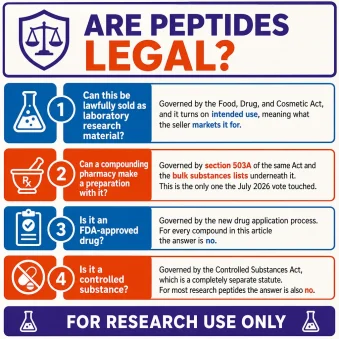
On 23 and 24 July 2026 the Pharmacy Compounding Advisory Committee reviewed seven peptides for the 503A affirmative list. Two of the four here were included.
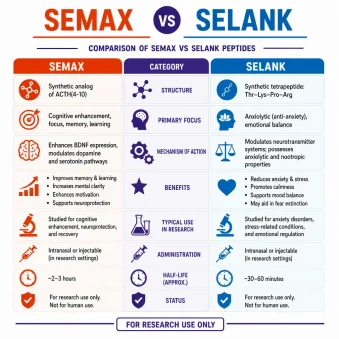
BPC-157 and KPV each passed 8 to 6 with one abstention on 23 July.[4] TB-500 passed by the same margin, MOTS-c 7 to 5, Semax 8 to 5, Epitalon (a popular anti-aging research peptide) 7 to 5, and DSIP was rejected 6 to 7.[4]
ARA-290 and thymosin alpha-1 were not reviewed.
The votes are advisory and not binding, rulemaking has not completed, and none of the recommended compounds is legal to compound today.[4] An 8 to 6 vote with an abstention describes a divided committee deciding narrowly rather than an endorsement, contrasting with the clearer regulatory consensus seen around mainstream GLP-1 therapies like Mounjaro and Ozempic.
There is a mild irony in the compound with the best clinical evidence in this article not appearing on the list at all, which reflects what was nominated for review rather than any assessment of the underlying data.
What Research Has Not Established
No published head-to-head comparison places any two of these compounds against each other under matched conditions. The ranking in this article assembles separate literatures with different endpoints, models and populations, and cross-study inference is weak evidence.
The ARA-290 result is one Phase 2 in one orphan indication with 64 patients over 28 days. It is the strongest thing here and it is not a Phase 3, not a broad indication, and not a long duration. Treating it as settled would overstate it in the other direction.
No completed controlled human efficacy trial exists for KPV or BPC-157. No published work establishes whether any of these compounds affects the resolution programme as distinct from suppressing inflammatory signalling.
What is well established: the two-receptor structure of EPO signalling and ARA-290's selectivity for the repair receptor, the Phase 2 design and outcome, the PepT1 dependence of KPV's effect, and the breadth of the BPC-157 rodent literature alongside the absence of human data. Those are checkable.
How These Are Characterised
All four are synthetic peptides confirmed by reversed-phase HPLC for purity and mass spectrometry for identity. Two specifics.
ARA-290 is 11 residues and its selectivity depends on the sequence being correct, since the whole design premise is discriminating between two related receptors. Sequence confirmation matters more here than for a compound with a broader mechanism.
KPV is three residues and sits within a couple of daltons of other short peptides, notably GHK, which shares a shelf in several of our blends. A chromatographic method that actually resolves them, particularly when distinguishing KPV from GHK-Cu, is worth asking about if you are working with a blend rather than the single compound.
At PrymaLab, research peptides are characterised with HPLC and mass spectrometry verification and independent third-party testing.
Frequently Asked Questions
Which anti-inflammatory peptide has the strongest clinical evidence?
ARA-290. A randomised, double-blind, placebo-controlled Phase 2 in 64 sarcoidosis patients met its primary endpoint, with a significant increase in corneal nerve fibre area at 4mg, roughly 23 percent above baseline.
How does ARA-290 work?
EPO signals through two receptor systems. ARA-290 is an 11-residue peptide from helix B of EPO designed to bind the innate repair receptor, an EPO receptor and CD131 heterocomplex, without activating the haematopoietic receptor.
What makes KPV's mechanism unusual?
A loss-of-function control. PepT1 carries it into cells where it inhibits NF-kB, and in PepT1-knockout mice the effect disappeared entirely.
Do anti-inflammatory peptides all regulate inflammation the same way?
No. KPV acts intracellularly on NF-kB, ARA-290 on a surface receptor complex, thymosin alpha-1 on immune cell populations. Different points of intervention.
Why is KPV a fragment of alpha-MSH rather than the whole hormone?
The melanocortin receptors recognise a core message sequence, His-Phe-Arg-Trp, at positions 6 to 9. KPV is positions 11 to 13 and contains none of it, so it cannot activate MC1R and does not cause pigmentation. Cutting there separates the two activities.
What is CD131 and why does it matter?
CD131 is the common beta chain, the shared signalling subunit of the interleukin-3, interleukin-5 and GM-CSF receptors. The innate repair receptor pairs it with the EPO receptor, which is why an EPO derivative has immune-adjacent effects. The complex is also described as injury-induced rather than constitutive.
Why does BPC-157 dominate the conversation?
Name recognition. It has a large rodent literature concentrated in a few connected groups and no completed controlled human trial.
Did the FDA review any of these in 2026?
BPC-157 and KPV were both recommended 8 to 6 with one abstention by PCAC on 23 July 2026. ARA-290 and thymosin alpha-1 were not reviewed. Advisory only.
Are these approved for human use?
No. Research use only. Thymosin alpha-1 is approved in some countries as a separate pharmaceutical product.
References
- Cibinetide (ARA 290) as a selective agonist of the innate repair receptor, an EPO receptor and CD131 heterocomplex.
- Safety and efficacy of ARA 290 in sarcoidosis patients with symptoms of small fiber neuropathy: a randomized, double-blind pilot study, and the subsequent Phase 2b corneal nerve fibre results. PubMed 23168581 and IOVS
- Dalmasso G, Charrier-Hisamuddin L, Nguyen HTT, et al. PepT1-mediated tripeptide KPV uptake reduces intestinal inflammation. Gastroenterology. 2008;134(1):166–178. Gastroenterology
- Pharmacy Compounding Advisory Committee meeting, 23 to 24 July 2026. FDA meeting materials
Trial details are summarised from published reports and company announcements and should be verified against the primary publications before being relied upon. Regulatory status is current as of 19 August 2026.
Final disclaimer: This article is an educational research reference. Compounds discussed are sold and studied for laboratory research use only and are not approved by any regulatory authority in the United States for human or veterinary use. Statements have not been evaluated by the FDA. Nothing here is medical advice, administration guidance, or a treatment claim for sarcoidosis, neuropathy, colitis, or any other condition.
Clinical trial results described above relate to investigational drug products administered under medical supervision and do not describe or support any use of research-grade material. Always verify the legal status of any research compound in your jurisdiction before purchase or use.